
When you first qualify as a heating engineer, it is very easy to feel like you need to buy everything straight away.
You see other engineers with full vans, expensive power tools, specialist boiler tools and bags full of kit, and it can feel like you are already behind before you have properly started.
But the truth is, you do not need every tool on day one.
You need a small, reliable starter kit that lets you work safely, deal with common heating jobs, and stop you constantly borrowing the basics from someone else.
If I was starting again, these are the tools I would buy first.
1. Grips
First on the list for me would be a decent set of grips.
You will use them constantly on radiator valves, pipe fittings, awkward nuts and seized parts. They are also useful when you need to hold one fitting steady while loosening another.
You do not need to go straight for the most expensive pair, but a good set makes a big difference. Cheap grips can slip, chew fittings and make a simple job feel harder than it needs to be.
My straightforward pick
Knipex Cobra 250mm water pump pliers
A dependable size for everyday fittings, with fine adjustment and a secure grip.
If you are only buying a few tools to begin with, grips should be right near the top.
2. Adjustable spanner
Next would be a good adjustable spanner.
Heating work involves a lot of different sized fittings, so an adjustable spanner saves you carrying loads of separate spanners when you are just starting out.
You will use it on radiator valves, boiler connections, compression fittings, filling loops and general plumbing work.
A decent adjustable spanner feels better in the hand, gives you more control and is less likely to slip or damage fittings.
3. Radiator and meter cabinet keys
These are two small, inexpensive tools, so I would buy them together and keep both in the same pocket of the bag.
A radiator key is useful for bleeding radiators and dealing with cold spots. A meter cabinet key gives access to common external gas and electric meter boxes when your work requires it.
Radiator key
The Ultimate Radiator Bleed Key
Metric and imperial ends in one stainless steel key.
£6.99HeatlabView radiator keyMeter cabinet key
4 way gas and electric utility key
A compact key for common triangle and square cabinet locks.
£3.99Stevenson PlumbingView meter cabinet keyThey are easy to lose, so a spare of each is worth adding later.
4. Pipe benders
If you expect to alter or install copper pipework, pipe benders earn their space quickly.
A good 15mm and 22mm set helps you produce neat bends, reduce unnecessary fittings and keep the finished job looking professional. They are bulkier than the small hand tools, but I would add them before buying lots of power tools.
Practical starter set
Hilmor GLM 15mm and 22mm pipe benders
Supplied with the common 15mm and 22mm formers and guides.
If you are only servicing and fault finding at first, they may spend some time in the van. If you are doing installations or pipe alterations, you will be glad you bought them.
5. Manometer or U gauge
For gas work, a manometer or U gauge is one of the first proper gas tools I would buy.
It is used for checking gas pressure and carrying out tightness testing as part of safe gas work. It is not something to guess with or treat casually. You need to use it properly and in line with your training and current gas procedures.
Gas testing essential
Arctic Hayes 30mbar 12 inch U Flex gauge
A flexible dual scale manometer with zero adjustment and a sealing cap.
If you are newly qualified, this is one of the tools that moves you from general hand tools into proper gas engineer territory.
6. Non contact voltage detector
A non contact voltage detector is a small but important tool.
Heating engineers are often around boilers, pumps, controls, programmers, wiring centres and thermostats. Even if you are not doing major electrical work, you still need to be aware of electrical safety.
A non contact voltage detector is not a replacement for proper safe isolation or correct testing, but it is a useful first check and a handy tool to have with you.
I would still add a proper voltage tester and multimeter later, but as a starter tool, a non contact voltage detector is useful, compact and inexpensive.
7. Temporary continuity bonds
Temporary continuity bonds are another item I would buy early.
When working on pipework, especially around gas or metallic services, maintaining electrical continuity can be important. These are not exciting tools, but they are part of working properly and safely.
Small safety item
Arctic Hayes economy continuity bond
They are small, easy to carry and show that you are thinking about safe working, not just getting the fitting apart.
8. Leak detection fluid
Leak detection fluid is a basic but important part of the kit.
It is used to check joints and fittings for leaks where appropriate. For the price, there is no reason not to have it in your bag.
Low cost essential
Arctic Hayes 120ml brush on leak detector
It is one of those simple things you should have available rather than trying to improvise.
9. Screwdriver and bit set, plus Milwaukee Fastback
A good screwdriver and bit set will get used constantly.
Boiler casings, controls, wiring centres, thermostats, pumps, clips and general fixings all involve screws. Cheap bits can round off screws and turn a simple job into a headache, so this is one area where buying decent kit makes sense.
Main screwdriver set
Wera Kraftform Kompakt 60
A compact handle, bit and pouch set for the proper screw jobs.
£49.95 inc VATDVS Power ToolsView the Wera setPocket companion
Milwaukee Fastback 6 in 1
A folding utility knife with a bit holder for quick everyday tasks.
£18.90 inc VATProtradeView the FastbackI would also add the Milwaukee Fastback with screwdriver here. It is not a gas specific tool, but it is one of those small everyday tools that earns its place quickly.
You can use it for opening packaging, trimming materials, cutting tape, sharpening pencils, stripping back light materials and doing quick small screw jobs without having to dig through your main tool bag.
Why it matters: a compact screwdriver set covers the proper jobs, while the Fastback is handy for all the small day to day tasks that come up on site.
10. Tool bag and PPE
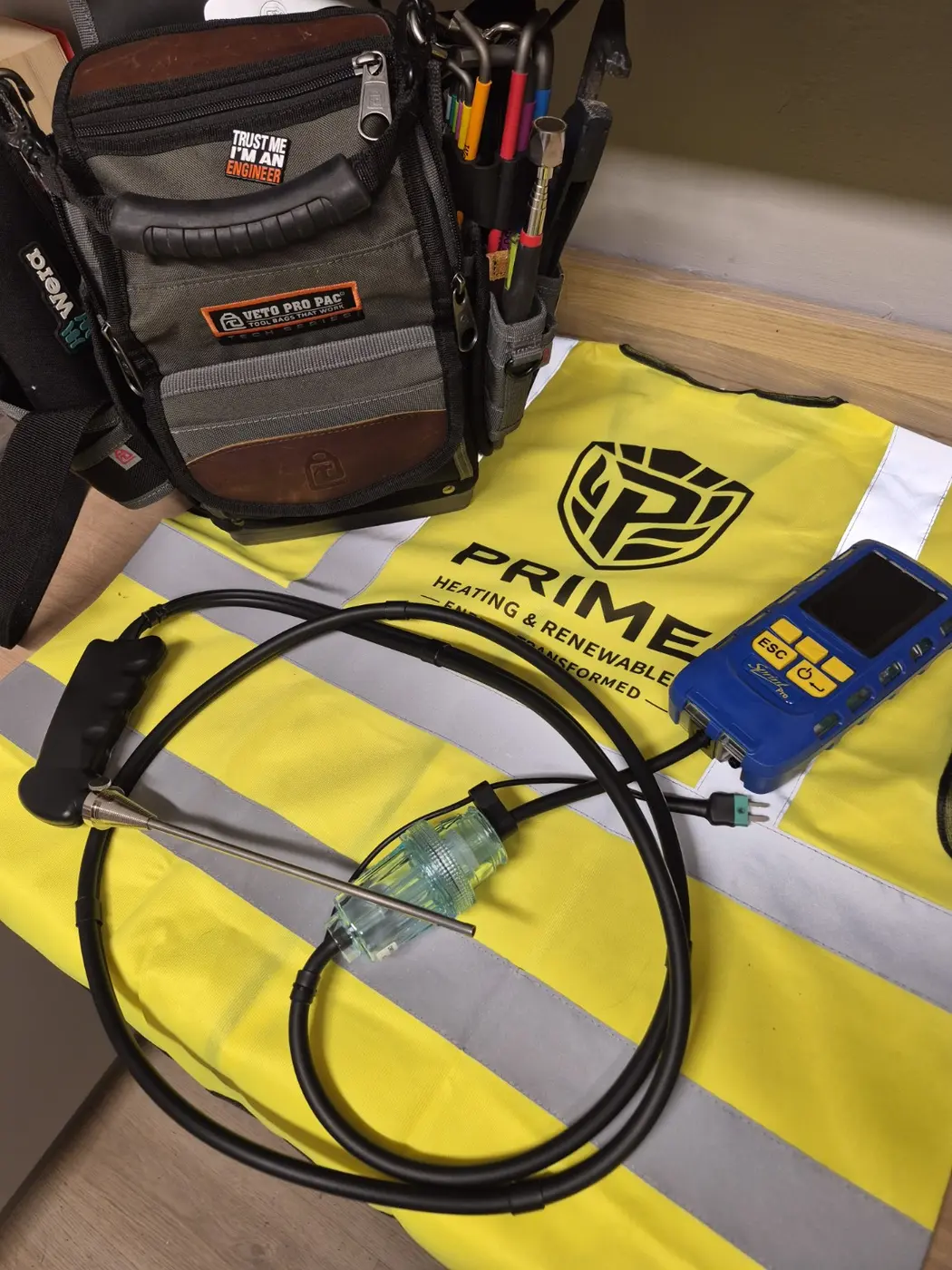
Once you have started buying tools, you need something decent to carry them in.
A proper tool bag keeps everything organised and helps you arrive ready to work in a customer’s home. PPE is just as important. Gloves, safety glasses and safety footwear should not be treated as optional.
Start here
Stanley FatMax 18 inch technician bag
A practical bag with a rigid base and enough room for a sensible starter kit.
£32.99 inc VATPrimeToolsView the Stanley bagUpgrade later
Veto Pro Pac TP XXL
A premium organised pouch that makes more sense once you know exactly what you carry.
£221.99 inc VATPrimeToolsView the Veto bagFor PPE, buy correctly fitting safety glasses, gloves and safety footwear that suit the work and your employer’s requirements. Fit and comfort matter more than choosing a fashionable brand.
Being organised makes a difference. It saves time, protects your kit and gives customers confidence that you know what you are doing.
What I would buy first
If money was tight and I was buying the absolute basics first, my first shopping list would be:
- Grips
- Adjustable spanner
- Radiator and meter cabinet keys
- Pipe benders
- Manometer or U gauge
- Non contact voltage detector
- Temporary continuity bonds
- Leak detection fluid
- Screwdriver and bit set, plus Milwaukee Fastback
- Tool bag, gloves and safety glasses
That would give a new heating engineer a practical starter kit without jumping straight into expensive power tools.
Estimated original outlay
What the top 10 cost together
This uses the listed starter choices and combines paired items. The pipe benders are shown at their VAT inclusive equivalent so every row can be compared fairly.
| No. | Starter choice | Cost |
|---|---|---|
| 1 | Knipex grips | £33.16 |
| 2 | Bahco adjustable spanner | £22.00 |
| 3 | Radiator and meter cabinet keys | £10.98 |
| 4 | Hilmor pipe benders, including VAT | £35.99 |
| 5 | Arctic Hayes U gauge | £43.15 |
| 6 | Fluke voltage detector | £30.00 |
| 7 | Temporary continuity bond | £13.90 |
| 8 | Leak detection fluid | £3.83 |
| 9 | Wera set and Milwaukee Fastback | £68.85 |
| 10 | Stanley starter tool bag | £32.99 |
| Listed tools and starter bag | £294.85 | |
Ways to spend less
Look for sensible second hand deals
You can often find genuine hand tools and tool bags for less on Vinted, Whatnot and Facebook Marketplace. Compare the exact model, ask for clear photographs and check the seller’s history before paying.
What can wait?
Power tools can wait.
A drill, impact driver, SDS drill and wet and dry vacuum are all useful, especially if you are doing installs, brackets, clips and heavier site work. But if you are just starting out, I would focus first on the tools you need for safe checks, basic heating work, small repairs and day to day jobs.
You can add power tools once the work justifies them.
Honourable mention: Plumb Thumbs and Plumb Tubs
These are not essentials, and I would not put them ahead of grips, a manometer, a meter key or basic safety kit.
But once you start doing more radiator work, repairs and small heating jobs, Plumb Thumbs and Plumb Tubs can make life a lot easier.
They are useful for catching water, controlling mess and helping protect the customer’s property when you are working on radiators, valves or pipework.
Are they necessary on day one? No.
Would I want them in the van once I started doing regular heating work? Definitely.
These small tools do not always look important until you are halfway through a job and trying to keep dirty system water off someone’s carpet.
For radiator removal
Plumb Thumbs pair
Caps radiator connections while the radiator is moved.
£9.95Victorian PlumbingView Plumb ThumbsFor catching water
Plumb Tub draining container
A flexible 1.4 litre tub that fits around common pipe sizes.
£8.99 inc VATPlumbhubView Plumb TubFinal thoughts
You do not need to build the perfect van setup overnight.
Start with the tools you will actually use. Buy the basics first, learn what you reach for every day, then upgrade and add specialist tools as the jobs demand it.
For a newly qualified heating engineer, the goal is simple: work safely, look organised, stop borrowing the basics, and build your kit steadily.